
Indian benchmark equity indices, Sensex and Nifty, experienced a decline in early trade, ending a three-day rally, primarily due to heavy selling in IT stocks and concerns over prolonged instability in West Asia.
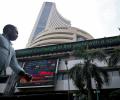
Benchmark stock indices Sensex and Nifty closed on a flat note in a choppy session on Wednesday as gains in PSU banks and auto shares were offset by losses in IT stocks.

India and the European Union are set to announce on January 27 the conclusion of negotiations and finalisation of a free trade agreement, which is aimed at boosting economic ties between the two regions amid disruptions in global trade due to US tariffs, an official said.

Equity benchmark indices Sensex and Nifty advanced for the third straight session on Tuesday driven by firm global cues and optimism over India-US trade agreement, even as investors turned to profit-booking at higher levels.
Among Sensex firms, Hindustan Unilever dropped the most by 3.20 per cent. UltraTech Cement, Kotak Mahindra Bank, Adani Ports, Titan, HDFC Bank and Axis Bank were also among the laggards. However, Bharti Airtel, ICICI Bank, Bharat Electronics and Sun Pharma were among the gainers.

From the Sensex firms, Kotak Mahindra Bank, Eternal, Asian Paints, NTPC, Bharat Electronics Ltd, Adani Ports, Infosys and State Bank of India were among the major gainers. However, Titan tumbled over 6 per cent. Trent, Axis Bank, Maruti and Hindustan Unilever were also among the laggards.

Benchmark stock indices Sensex and Nifty declined on Monday, extending the losing run to the fourth day amid selling in IT shares and foreign fund outflows. The 30-share BSE Sensex dropped by 247.01 points or 0.30 per cent to settle at 82,253.46. During the day, it fell 490.09 points or 0.59 per cent to 82,010.38 but recovered some of the losses towards the close.
Titan, HCL Tech and State Bank of India were also among the laggards. However, Hindustan Unilever, Asian Paints, ICICI Bank, Power Grid, HDFC Bank and ITC were the gainers.

Stock markets snapped the four-day falling streak on Tuesday with the benchmark Sensex rebounding by 317 points on buying in auto and pharma shares amid a decline in retail inflation to a more than six-year low, nearing the RBI's comfort zone. The 30-share BSE Sensex climbed 317.45 points or 0.39 per cent to settle at 82,570.91. During the day, it jumped 490.16 points or 0.59 per cent to 82,743.62. The 50-share NSE Nifty edged higher by 113.50 points or 0.45 per cent to 25,195.80.
From the Sensex pack, Bharti Airtel, Asian Paints, Infosys, Bharat Electronics, Tech Mahindra and Eternal were major laggards. However, Maruti, Tata Steel, Bajaj Finance, Bajaj Finserv, Trent and Tata Consultancy Services were among the gainers.

Signing of the two pacts -- FTA in services and investments -- were scheduled during the India-ASEAN Economic Ministers meeting in Myanmar last week. But the meeting was postponed as Commerce and Industry Minister Nirmala Sitharaman was not able to attend the meet due to domestic compulsions.

Analysts believe Tesla will first focus on building the Model Y brand before expanding -- both in terms of volume and models.

India and the Association of Southeast Asian Nations signed an FTA in goods in August last year and are engaged in intense negotiations to expand this pact to include services and investments.

From the Sensex firms, Adani Ports, Eternal, Bajaj Finance, Axis Bank, Bajaj Finserv, Reliance Industries, Power Grid and NTPC were the major gainers. Sun Pharma, however, tanked over 5 per cent.
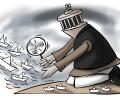
Moody's Investors Service on Thursday said India is likely continue to face challenges in raising longer-term growth potential and creating enough jobs for its young population in the absence of higher trade openness. In its report on South Asia sovereigns, Moody's said compared with other South Asian economies, India appears to be in a better position to deepen its integration in global value chains, attract FDI and increase exports. The country has better macroeconomic fundamentals, more stable politics and a more developed export sector.
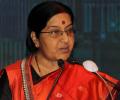
India on Thursday pitched for unleashing the "collective strength" of the South Asian Association for Regional Cooperation as External Affairs Minister Sushma Swaraj underlined the need for a South Asian Economic Union with greater connectivity and forward movement on pending agreements on rail and motor vehicles.
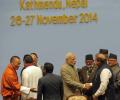
In a phased and planned manner the countries will go for Free Trade Areas, a Customs Union, a Common Market, and a Common Economic and Monetary Union.
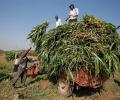
The World Bank on Tuesday raised the growth forecast for the Indian economy to 7 per cent for the current fiscal year on the back of recovery in agri sector and rural demand. World Bank had in June projected India to grow at 6.6 per cent for FY24. According to the World Bank Report released on Tuesday, India's growth continues to be strong despite a challenging global environment.

According to a senior commerce department official, talks between India and the Association of South East Asian Nations (Asean) - the 10-country trading bloc - have hit a roadblock, with some of the advanced developing countries demanding greater flexibilities from India.

Taking India's Look East policy a step further, Prime Minister Manmohan Singh on Saturday announced visa-on-arrival facility for citizens of Cambodia, Vietnam, Philippines and Laos; and emphasised the need to speed up the finalisation of a free trade agreement in services and investment between India and South East Asian nations.

Under the services sector, India had been demanding greater opening, so that more professionals like doctors, nurses, chefs, accountants get greater job opportunities.

'Disengagement is merely the first step in a lengthy process of arriving at a new normal along the LAC in Eastern Ladakh and the entire land boundary.' 'The Indian government should insist on the restoration of the status quo ante in Eastern Ladakh.'
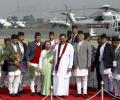
Prime Minister Narendra Modi and leaders of other South Asian Association for Regional Cooperation countries will meet in Kathmandu on Wednesday with an aim to revitalise the regional grouping and make it a major platform to fuel economic growth through liberalised trade and combat challenges of terrorism and climate change effectively.
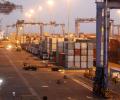
India may not be prepared to meet US demands, say experts

A Collection of Services Trade Statistics Act is being thought of.
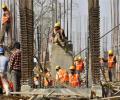
"We see the Indian economy rebounding from our projected 6.1 per cent growth this fiscal year to something like 7 per cent in the next fiscal year (2020). We see the factors that will support growth, including monetary policy stimulus, working their way through the pipeline," Jonathan Ostry, Deputy Director, Asia Pacific Department at the IMF, told reporters.
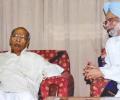
'Narasimha Rao asked me why China was doing so well in attracting foreign investments and I gave my frank opinion.' 'I told him that giving thrust to exports had to be a national effort.' 'But in India, the system was very centralised in the Government of India and the state governments had no role to play.'
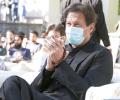
We must fight this global challenge confronting humanity together, Khan said on Twitter.

Major General S C N Jatar, who passed into the ages on Monday night, thwarted anti-national forces at the peak of the Assam agitation. Colonel Anil A Athale (retd) salutes this officer and gentleman.

The Singapore Minister applauded Prime Minister Modi's effort to make India the manufacturing hub of the world.

Their favourite alternatives: Malaysia, Vietnam and the Philippines. Note, India is missing from that list. And this is despite an attractive financial incentive scheme for OSAT players. The reason, said a senior executive of a US chip company who had a meeting in Taiwan just a few weeks ago, is that "they want more predictability in government policy because they plan to put in big money."

Hectic parleys through out the year led to finalisation of the long-awaited India-ASEAN Free Trade Agreement on services and investment during the 20th India-ASEAN Commemorative Summit held in New Delhi at the end of the year.

Indian firms feared they would lose business if US ratified the Trans-Pacific Partnership agreement with 11 other countries.

The Asean secretariat hopes the meet may be able to iron out existing wrinkles raised by India. Since there had been no significant progress on the matter over the past two years on most issues, New Delhi is yet to decide on the invite.
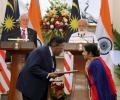
Considering the common linkages, high-level trust, complementarities, and convergent interests between the two nations, Malaysia has the potential to become India's key partner in Southeast Asia, says Dr Rahul Mishra.
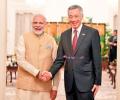
Modi hailed the close defence cooperation between the two countries and welcomed the completion of the logistics agreement between the two navies.

Aiming to give fillip to India's Look East policy, Prime Minister Manmohan Singh is expected to announce new initiatives to take forward ties with the ASEAN by setting up a mission and appointing an ambassador for the 10-member grouping.
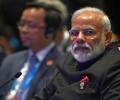
India has been forcefully raising the issue of market access as well as protected lists of goods mainly to shield its domestic market as there have been fears that the country may be flooded with cheap Chinese agricultural and industrial products once it signs the deal.

Sources said China was forcefully pushing for inking the deal during the RCEP summit later in the day, which was seen as an attempt to counter-balance the impact of its lingering trade war with the US as well as to project the region's economic might to the West.
 © 2026 Rediff.com - Advertise with us - Disclaimer - Privacy Policy - Sitemap - Feedback - About us - Terms of use - Grievances